
Emotional Invalidation: Signs, Effects, and How Therapy Helps
Emotional invalidation — when feelings are dismissed or minimized — harms self-worth and relationships. Learn the signs, effects, and how therapy helps.
by Pamela Madsen, MS, LPC, ACS | , updated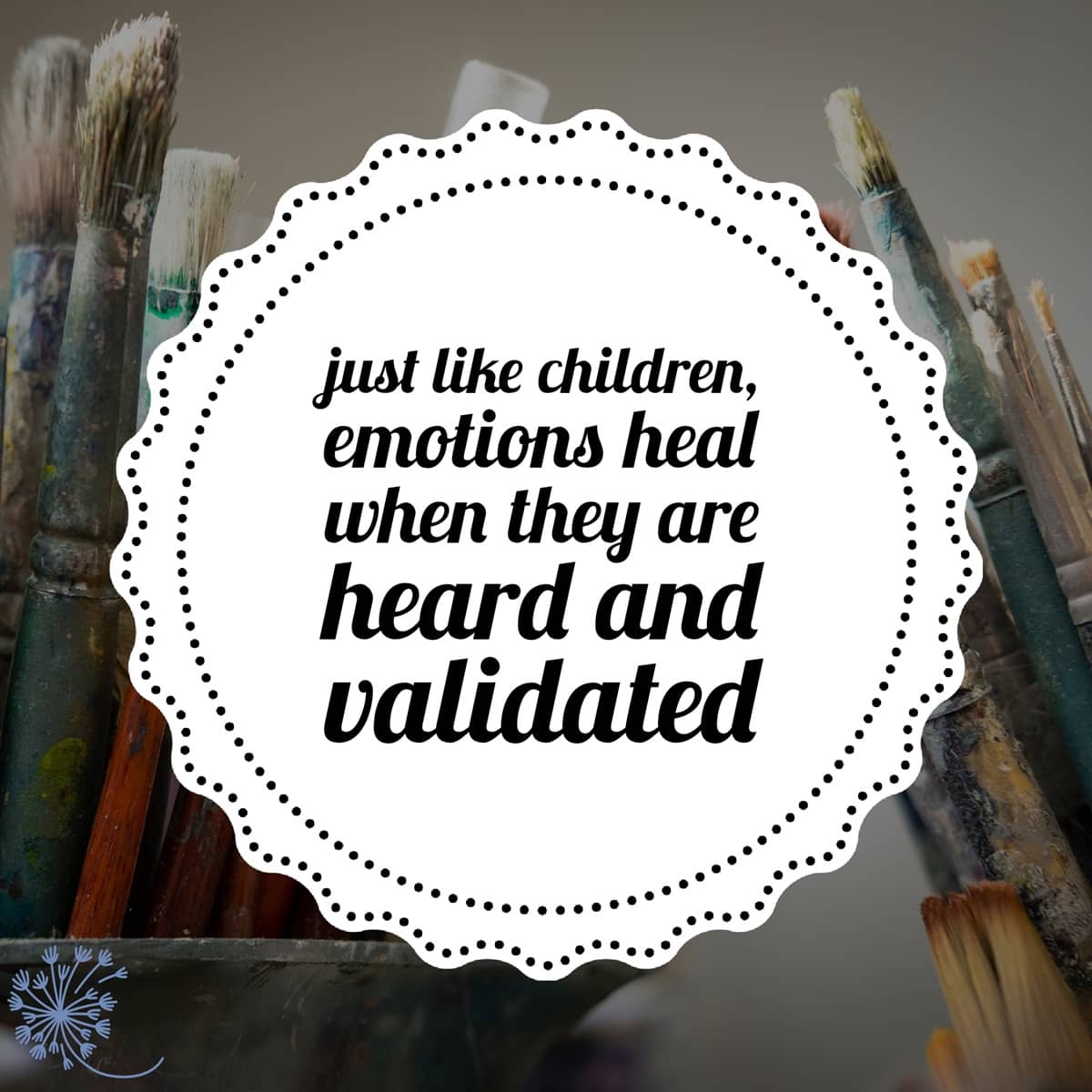
As a licensed professional counselor (LPC) specializing in relational trauma and emotional abuse in Atlanta, I work with many clients who arrive in therapy feeling confused, self-doubting, and unsure whether their emotional experiences are even valid. More often than not, emotional invalidation is at the root of that confusion.
Emotional validation is essential in healthy relationships and personal well-being. It involves acknowledging and accepting another person’s emotional experiences as real and important — not necessarily agreeing with them, but recognizing that they exist and matter. Emotional invalidation is the opposite: it occurs when someone’s feelings are dismissed, minimized, or judged as unworthy of attention. This can happen unintentionally or deliberately, but its impact is profound either way, often leading to self-doubt, shame, and deeply strained relationships.
What is Emotional Invalidation?
Emotional invalidation happens when another person’s emotional response is treated as wrong, excessive, irrational, or unworthy of acknowledgment. It can be overt or subtle, but the common thread is that the person on the receiving end leaves the interaction feeling worse about their own inner experience.
Common forms of emotional invalidation include:
- Minimization: “It’s not a big deal, don’t overreact.”
- Dismissing: “You’re just being too sensitive.”
- Ignoring: Failing to acknowledge or respond to someone’s emotions at all.
- Blaming: “You’re the reason this happened.”
- Comparing: “Others have it worse, so you shouldn’t feel this way.”
- Intellectualizing: Responding to emotion with logic or problem-solving rather than empathy.
- Toxic positivity: “Just stay positive — everything happens for a reason.”
These responses, while sometimes well-intentioned, undermine a person’s sense of self-worth and interfere with their ability to express and process emotions effectively.
What does emotional invalidation feel like?
People who experience emotional invalidation often describe a specific, disorienting feeling: they came to someone with a genuine emotional need and left the conversation feeling ashamed for having it. Over time, repeated invalidation produces a deeper shift — people begin to question whether their inner experience can be trusted at all.
Common feelings associated with emotional invalidation include:
- Confusion about whether your reaction was “appropriate”
- Shame or embarrassment about having the feeling in the first place
- Withdrawal — keeping emotions to yourself to avoid the response
- A persistent sense of being misunderstood or invisible
- Anger that feels disproportionate (often because the core wound was never addressed)
If any of these feel familiar, you are not alone — and your feelings are not the problem.
The Long-Term Impact of Emotional Invalidation
When individuals experience repeated emotional invalidation — particularly in close relationships — they may begin to doubt their own feelings and perceptions. This can lead to significant psychological consequences:
- Self-doubt: Feeling chronically unsure about your own emotions and reactions.
- Difficulty in relationships: Struggling to connect authentically with others, or choosing partners who repeat the same invalidating patterns.
- Emotional distress: Increased anxiety, depression, or disproportionate anger.
- Low self-esteem: Feeling fundamentally unworthy or overly demanding.
- Emotional numbness: Shutting down feelings entirely as a form of self-protection. (See our post on emotional numbness for more on this response.)
Recognizing these signs is the first step toward understanding the impact emotional invalidation has had — and beginning to heal from it.
Emotional Invalidation in Childhood
Some of the most formative experiences of emotional invalidation happen in childhood. When a child’s emotional expressions are consistently met with dismissal, ridicule, or punishment, they learn a core lesson: my feelings are a problem. This belief often persists into adulthood, shaping how people relate to themselves and others for decades.
Common childhood invalidation sounds like:
- “Stop crying or I’ll give you something to cry about.”
- “You’re so dramatic.”
- “We don’t talk about things like that in this family.”
- Silence or distraction in response to a child’s distress.
Children who grow up in emotionally invalidating environments are at higher risk for anxiety, depression, difficulties with emotional regulation, and relationship challenges in adulthood. This is a core focus of trauma-informed therapy — understanding how early invalidating experiences shape the nervous system and the sense of self.
Is emotional invalidation a form of emotional abuse?
Emotional invalidation exists on a spectrum. Occasional invalidation is a normal part of human imperfection — no one responds with perfect empathy every time. However, when invalidation is consistent, deliberate, or used as a tool of control, it crosses into emotional abuse.
Patterns that suggest abuse rather than imperfection include:
- Responding to your emotions with contempt, mockery, or punishment
- Using your emotional reactions against you in arguments
- Insisting your perception of events is wrong (gaslighting — see below)
- Isolating you from others who might validate your experience
Repeated emotional abuse of this kind can contribute to complex PTSD and other trauma responses. Our post on narcissistic abuse and C-PTSD explores how these patterns develop in relationships with narcissistic partners or family members.
What is the difference between emotional invalidation and gaslighting?
These terms are often used interchangeably, but they describe related and distinct experiences.
Emotional invalidation means your feelings are dismissed or minimized — someone tells you that your emotional response is wrong, excessive, or unwarranted. “You’re overreacting.”
Gaslighting is a specific form of psychological manipulation in which someone denies your perception of reality itself — causing you to question your memory, judgment, or sanity. “That never happened. You’re imagining things.”
Gaslighting always involves emotional invalidation, but emotional invalidation is not always gaslighting. Gaslighting is typically intentional and is a hallmark of emotionally abusive relationships. Both, however, erode your trust in your own inner experience — which is why healing often involves rebuilding that trust from the ground up.
Setting Effective Boundaries
Setting boundaries is one of the most important tools for protecting yourself from the ongoing effects of emotional invalidation. Here are strategies for establishing and communicating them:
- Self-awareness: Understand your own emotional needs and triggers. Notice when you feel invalidated and how it affects you in the moment.
- Identify your limits: Determine what behaviors and responses are acceptable and unacceptable to you in relationships.
- Communicate clearly: Express your needs assertively but respectfully. “I” statements — “I feel dismissed when my concerns are minimized” — are more effective than accusatory language.
- Enforce consistently: Reinforce your boundaries with follow-through. Boundaries without consequences are requests.
- Seek support: Surround yourself with people who respect your emotional experience. If invalidation has significantly impacted your well-being, working with a therapist is one of the most effective paths forward.
Self-Validation: Learning to Trust Your Own Emotions
One of the most powerful skills you can develop — especially if you have a long history of being invalidated — is the ability to validate yourself. This does not mean telling yourself that every emotional reaction is proportionate or that your behavior is always justified. It means acknowledging that your feelings exist, that they are real, and that having them does not make you weak, dramatic, or broken.
Practical self-validation looks like:
- Naming the emotion: “I feel hurt right now.” Simply labeling a feeling activates the prefrontal cortex and reduces its intensity.
- Acknowledging the why: “It makes sense that I feel this way, given what I experienced.”
- Separating feeling from action: Recognizing that you can feel something without immediately acting on it.
- Challenging the inner critic: When you notice a voice saying “you’re overreacting,” ask whose voice that originally was.
Mindfulness practices — particularly those used in Dialectical Behavior Therapy (DBT) and Internal Family Systems (IFS) — are especially effective for building this skill.
How Therapy Helps You Heal from Emotional Invalidation
Talking about emotional invalidation can feel vulnerable, particularly if therapy itself has felt invalidating in the past. At Sea Change Psychotherapy, we use evidence-based approaches specifically suited to the relational wounds that invalidation creates:
Internal Family Systems (IFS) is particularly well-suited to healing from emotional invalidation because it works directly with the “parts” of you that internalized invalidating messages — the part that says you’re too much, or not enough, or should just get over it. IFS helps you understand where those beliefs came from and gradually release them. Learn more about IFS therapy in Atlanta.
EMDR (Eye Movement Desensitization and Reprocessing) helps process specific memories of being invalidated — experiences that still carry emotional charge years or decades later. EMDR doesn’t require you to talk through every detail; instead, it works with the nervous system’s own healing capacity to reduce the impact those memories have on your present life. See how EMDR is used to heal from emotional abuse.
Emotionally Focused Therapy (EFT) is especially helpful when emotional invalidation is occurring in a current relationship. EFT works with couples to identify the underlying attachment needs driving the invalidating cycle, and to help partners respond to each other with genuine empathy. Learn more about EFT for couples.
Can emotional invalidation cause trauma?
Yes. While a single invalidating comment rarely causes lasting harm, chronic emotional invalidation — particularly in childhood or in intimate relationships — is a recognized form of relational trauma. The nervous system responds to consistent emotional dismissal similarly to other chronic stressors: with hypervigilance, emotional numbing, or collapse.
This is sometimes called “small-t trauma” to distinguish it from single-incident traumas, but the cumulative impact can be just as significant. Many people in therapy for anxiety, depression, or relationship difficulties discover that early emotional invalidation is a central thread running through their struggles.
How do I respond when someone invalidates my feelings?
In the moment, being invalidated can be disorienting — it’s hard to think clearly when you’re also managing the emotional impact. A few approaches that can help:
- Name it simply: “When you say that, I feel like my experience isn’t being taken seriously.” Keep it specific and non-accusatory.
- Disengage if needed: You are not required to defend the validity of your feelings in real time. It is okay to say “I’m not going to discuss this right now” and return to it later.
- Validate yourself first: Before expecting understanding from the other person, take a moment to acknowledge your own experience internally.
- Consider the pattern: Is this a one-time response, or part of a consistent dynamic? The answer shapes what kind of action makes sense.
If emotional invalidation is a recurring feature of a relationship — whether with a partner, family member, or colleague — couples counseling or individual therapy can help you navigate it more effectively.
Moving Forward
Emotional validation and boundary-setting are foundational to healthy relationships and personal growth. By recognizing the signs of emotional invalidation — in others and in yourself — you begin to reclaim trust in your own inner experience.
Your feelings are not too much. They are information. And they deserve to be heard.
If you are struggling in your relationships or with the long-term effects of emotional invalidation, therapy can be a powerful space to heal from those experiences and build the skills to move forward. We work with individuals and couples throughout Atlanta and virtually across Georgia.
Ready to take the next step?
Compassionate, evidence-based therapy in Buckhead and online across Georgia. Reach out when you're ready — you don't have to do this alone.
Schedule an Appointment